Deep dive · Osoul · live
Osoul deep-dive: multi-tenant platform with owned provisioning
Custom onboarding and Osoul-owned tenant provisioning, with full isolation of data, identity and configuration between restaurant groups.
Part of the Osoul platform case study.
Problem
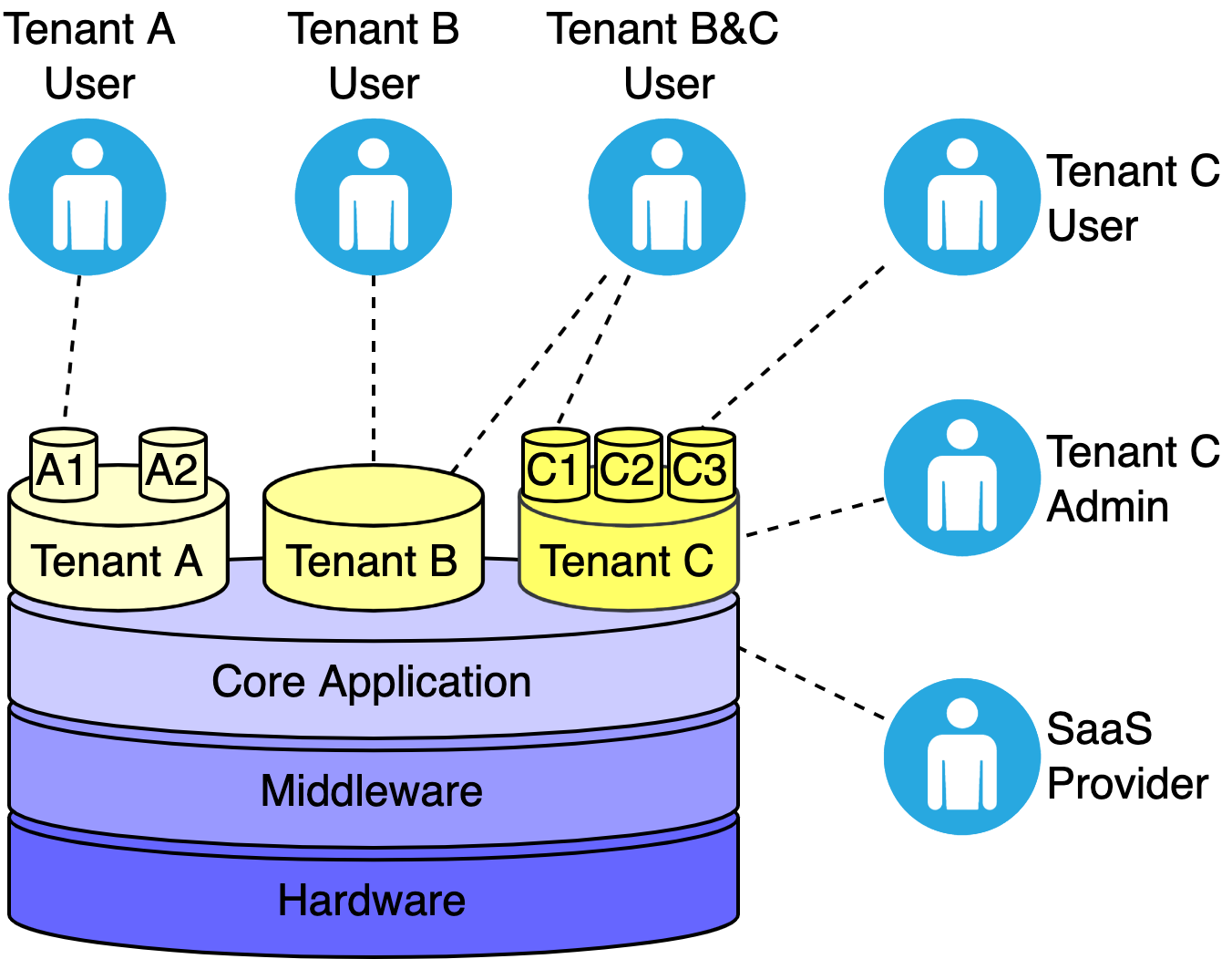
Osoul serves restaurant groups that compete with each other. Each group has its own venues, staff, menus, guests and revenue data, and none of it may ever be visible to another group, by a bug, a mis-scoped query or a misconfigured token. At the same time, onboarding a new group has to be fast and repeatable: a restaurant should not wait weeks to go live.
Constraints
- Full isolation: data, identities, configuration and secrets are separated per tenant, not just filtered in the UI.
- Custom onboarding: each group brings its own venues, floors, menus, POS/PMS and brand, so onboarding is guided rather than self-serve.
- Owned provisioning: Osoul provisions tenants itself, through internal-only tooling, so every tenant is created the same way and can be audited.
- One codebase: isolation must come from the platform, not from forking the product per client.
Architecture
Each tenant gets its own database, Keycloak realm, storage bucket and caching layer.
Key decisions
- Provisioning is a product, not a script. Creating a tenant goes through one service that sets up identity, data and configuration together, so a tenant is never half-created.
- Isolation is enforced below the application code. The tenant is resolved from the request itself, from its origin and CSRF token, before any query runs, so a missing filter cannot leak another group’s data.
- Onboarding stays guided. Fine-dining groups need their floors, menus and integrations right on day one; a guided onboarding beats a sign-up form for that.
Results
Numbers to come.