Deep dive · Osoul · live
Osoul deep-dive: secure NFC/QR table sessions
How a tap on a table's NFC tag or QR code opens a short-lived session for an anonymous diner, bound to one table and one visit.
Part of the Osoul platform case study.
Problem
Diners order from their phone after tapping the table, without an account. That makes the table itself the credential: whoever holds a valid link can order to that table. A photo of a QR code, a link shared in a group chat or a guess at a table number must not let anyone order to someone else’s bill.
Constraints
- No sign-up: asking diners to create an account before ordering kills adoption.
- Physical tags are public: anyone can photograph a QR code, so the code alone cannot be the whole secret.
- Sessions end with the visit: an order link must stop working once the table is cleared.
- Staff see the same truth: the Waiter App needs to know which tables are seated and for how long.
Architecture
Diagram source (Mermaid)
flowchart TB
  tag[NFC tag · QR code · table id + credential] --> session[Table session · short-lived, one table, one visit]
  session --> guest[Guest App · order, call service]
  session --> waiter[Waiter App · floor, sections, status]
  waiter --> cleared[Table cleared · session closed]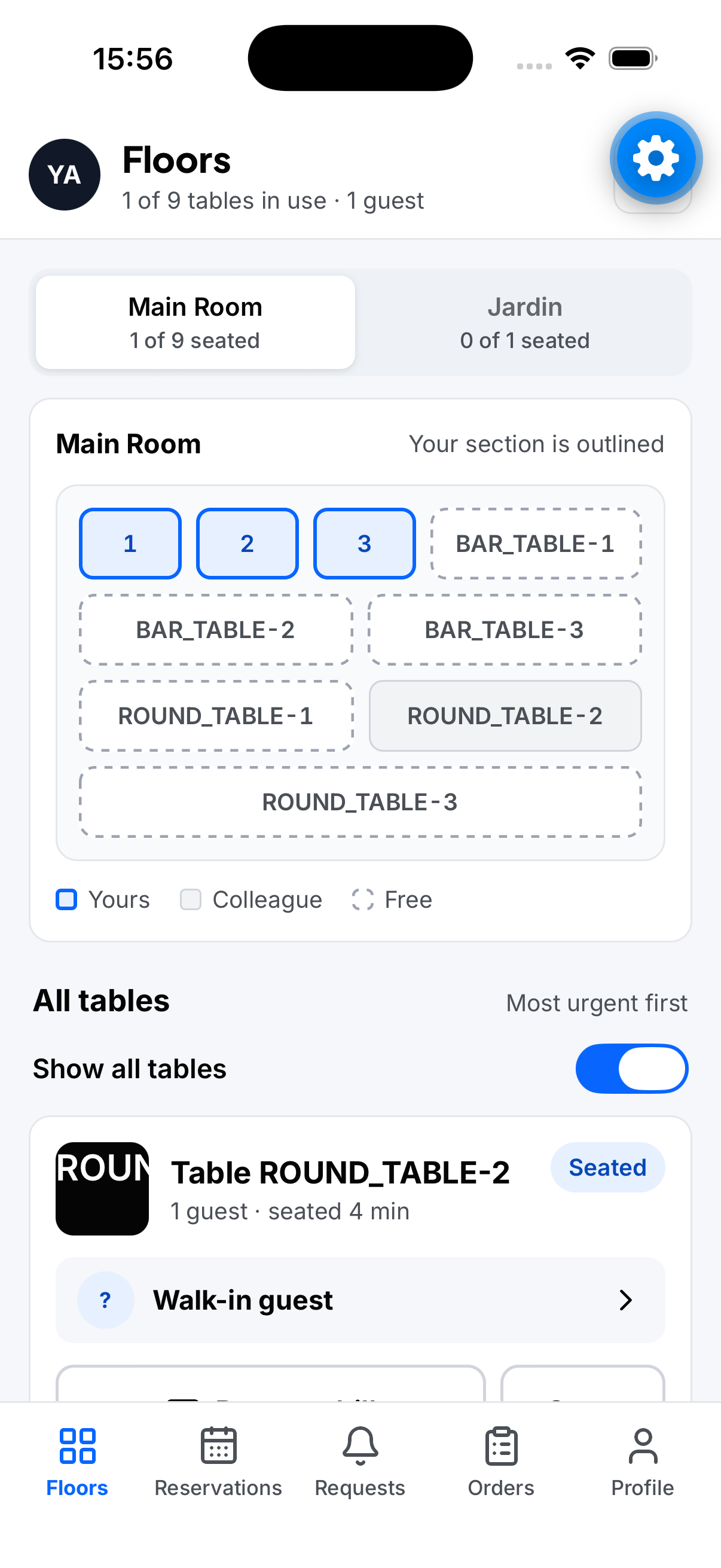
Key decisions
- A session per visit, not a permanent table URL. A permanent link would work forever for anyone who saved it. The tap exchanges the tag’s credential for a short-lived session token bound to that table and that visit.
- Sessions close with the table. When staff clear the table, the session ends, so a link from lunch cannot order at dinner.
- One session, two views. The Guest App and the Waiter App read the same session, so the floor view shows who is seated and for how long without staff entering it twice.
Results
Numbers to come.